
How to Cook Parboiled Rice
I first had parboiled rice in a restaurant and loved the texture. I perfected this parboiled rice recipe after making it several times. Today I’m sharing a simple technique for making fluffy parboiled rice, along with a recipe you can always rely on.

I have used long-grain basmati rice for this recipe; the grains stay separate, cook perfectly, and retain more nutrients than regular white rice.
You can use parboiled rice in dishes where you’d normally use regular basmati rice, although the cooking time may vary. From my experience, parboiled rice doesn’t absorb flavors as readily as regular basmati rice. Its firmer texture means seasonings may not penetrate the grains as deeply, but the rice still takes on flavor and certainly isn’t bland.
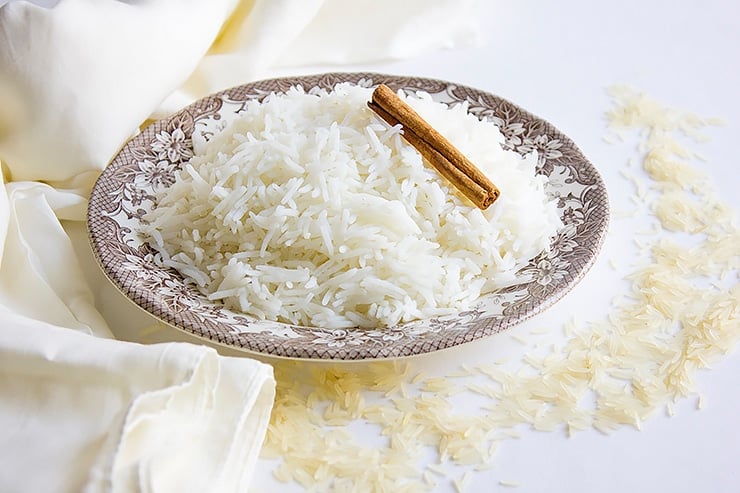
Ingredients You’ll Need
Find the full measurements and step-by-step instructions in the recipe card below.
- You’ll need Uncooked basmati parboiled rice. Parboiled rice comes in several varieties, so choose long-grain basmati parboiled rice for the best texture.
- Olive oil adds a light, delicate flavor and helps keep the rice from sticking together while cooking.
- Of course, we need Water and salt. Parboiled rice needs more water than regular white rice. Salt enhances the subtle, nutty flavor of parboiled rice.
How to Cook Parboiled Rice (Step by Step)
If you are a beginner, you’ll enjoy cooking parboiled rice; it’s forgiving, and people rarely mess it up.
Step 1: Bring the water to a boil, then add the olive oil and salt.

Step 2: Drain the rice that you’ve washed and soaked for 20 minutes, then add it to the boiling water. When it comes back to a boil, reduce the heat to medium-low and cook for about 14 minutes.

Step 3: Drain the rice, then return it to the pan. Cover the pan and let the rice rest for 15 minutes before serving.

Tips for Perfect Parboiled Rice
- Use your preferred fat: Olive oil adds lovely flavor, but you can easily use butter, ghee, or another neutral oil.
- Wait for a rolling boil: Do not add the rice until the water reaches a full rolling boil. This helps the grains cook properly and prevents the rice from becoming starchy or sticky.
- Let the rice rest before serving: After draining, cover the rice for a few minutes to let the steam finish cooking and improve the texture.

Frequently Asked Questions
What is parboiled rice?
Parboiled rice is the rice that’s been partially boiled in its husk before milling and packaging.
Does parboiled rice taste different?
Yes, parboiled rice has a slightly nuttier, fuller flavor than regular white rice, while still staying mild enough to pair with many dishes.
Do I need to soak parboiled rice?
For this recipe, I recommend soaking the parboiled basmati rice 20 minutes before cooking. Soaking helps the grains cook more evenly and can shorten the cooking time.
Why is my parboiled rice still hard?
If the grains are still firm, add more boiling water and continue cooking until tender.

Storing and Reheating Parboiled Rice
Don’t keep the rice at room temperature for long; as soon as it’s fully cooled, transfer it to an airtight container. Refrigerate for up to 4 days.
Reheat the parboiled rice on the stovetop or in the microwave.
Dishes That Pair With Parboiled Rice
Looking for more ideas? Check out my best rice recipe collection for easy, flavorful dishes.

Perfect Parboiled Rice
Ingredients
- 1 cup uncooked parboiled rice. long grain or basmati parboiled rice.
- 1 tablespoon salt, leveled
- 1 teaspoon olive oil
- 7 ½ cups water
Instructions
- Wash and rinse the rice until the water is almost clear.
- Soak rice in lukewarm water for 20 minutes.
- In a pan, boil the water, add salt and olive oil.
- When the water comes to a rolling boil, add the rice, let it come to a boil again.
- When the water returns to a boil, cook the rice over medium-low heat for 14 minutes.
- Drain the rice. Return the rice to the pan and cover. Keep the rice covered for 15 minutes before serving.
Notes
- Washing the rice is crucial unless its package says it’s been washed before packing or mentions (washing not required) on the box.
- Make sure the water reached a rolling boil or else the rice will turn sticky and starchy.
- Instead of olive oil, you can add regular oil or unsalted butter.




I never tried this way, this is huge amount of water per cup, will try it next time!
Hi Farida,
This is a boil and drain method, it requires more water so the rice doesn’t get starchy and stick together, also one cup of par-boiled rice when cooked become much bigger and longer than normal rice. believe me, this much water is the right amount. Please let me know your feedback whenever you try it 🙂
Your rice comes out just beautiful! I can see why you like to use this method, especially for photoshoots!
Thanks Chris 🙂
The rice came out just beautiful! It’s perfect white and perfectly cooked!
Thanks Nagi, you are so sweet 🙂
Wow it looking perfect. I will try it when next i cook my rice
The rice came out awesome, cooked to perfection. Thanks for the recipe, I’ll definitely be cooking parboiled this way from now on. 🙂
Just one -rather theoretical- question. Why soak the rice? It didn’t seem to have any noticeable effect on volume, so I guess the water didn’t actually penetrate the rice.
The soaking makes the cooking time shorter.
Is parboiled rice good for diabetic?
Hi Marita, I read that Parboiled rice has less impact on blood sugar than white rice, but it is always best to consult with your Doctor before changing your diet. I hope this helped.
I thought you are not supposed to rinse the parboiled rice.
It depends on the brand you are using!
When you return the rice to the pan after draining the water, you say to return it to the pan and cover it for 15 minutes. Shouod the heat still be on medium-high? (I doubt it…?) Or, should it be on low? Or do I turn off the heat entirely and just let it sit covered while the stove is off? Thanks very much for clarifying.
Hi, the heat should be off! Hope this helped 🙂
I’ll have to look for parboiled Basmati next time I’m at the store. I find it so annoying when rice doesn’t turn out right.
My husband is a big lover of rice. I’ll have to try this.
Let me know, how it turned out for you 😉
thanks for the details.. i have not tried parboiled basmati yet..
and did not realize that this looks better photographed :)that is a cool tip to know
You are welcome Vidya 🙂
A good recipe to master. It goes with everything!
Do you have any comments on how much water, salt, olive oil to add for 2, 3 cups of rice or should I just multiply up? 1 cup of rice is not enough for my family and I still think 15 cups of water for 2 cups of rice is too much. Thanks
Hi Annie, the idea behind adding that much water is to allow each grain of rice to cook freely and not produce starch and get sticky. You can add less water as long as the rice doesn’t get starchy while cooking. You can always keep extra hot water aside and add it to the rice if the water reduced or the rice looked starchy. I hope this helped 🙂
Great recipe, thank you!
How much water does one need for the rice cooker method?
I have used 2.5 cups of water per cup of rice in my rice cooker. I wasn’t very happy as the cooke rice remained a but rubbery or grains too separated
I have never made parboiled rice in a rice cooker before, I’m not sure I can offer more guidance on this.
wow, I tried this and came out with rice that didn’t go to mush and the grains did seem longer. I have always had a terrible time with rice and this method turned out really well. This is now the method I will use. Thank you
Thank you so much for your kind comment 🙂
I was a bit merit l nervous I would fail again but with your simple steps my rice came out perfect! Thank you
You are most welcome 🙂
I make this weekly! My husband calls it magical basmati rice 🙂 Lovely forgiving cooking formula. I am going to try a similar, water modified, method using brown basmati! Thank you so much.
I’m glad that you enjoyed my recipe 🙂
Are there options for longer term storage e.g. freezing?
Thanks for an informative site.
Hi Teresa, you can freeze the parboiled rice but some said that it gets dry when microwaved, so it’s better to reheat it on the stovetop. Hope this helped 😊
This recipe needs to be updated and corrected. You do not need to use 7 1/2 cups of water for 1 Cup of Parboiled Rice.
The rice would literally be swimming in the water. You only need 1 1/2 cup of water for the rice to be just the right amount of tenderness. 2 cups to 2 1/2 cups of water. Will make the rice too mushy.
Hi Jackie,
The goal is to make the rice swim in the water, becuase this won’t make it sticky. In this method of boiling and then draining the rice, you need the rice to be boiling in a good amount of water. Lots of water and space, will make the rice get fluffy, increase in size, and remove as much starch to make it fluffy and light. But if you are not draining the rice and that’s the method you prefer and it works for you, continue doing so.