
Labneh Recipe – Creamy Homemade Yogurt Cheese
Making homemade labneh is surprisingly easy. All you need is full-fat plain yogurt, a little salt, cheesecloth, and time for the whey to drain. What remains is thick, creamy, spreadable labneh with the delicious tangy flavor I grew up with.

For this labneh recipe, I purposely made a small batch using regular full-fat yogurt rather than Greek yogurt. After 19 hours of straining in the refrigerator, 340 grams of yogurt gave me about 150 to 160 grams of beautifully creamy labneh.
It’s a practical amount for one or two people and a great place to start if you’ve never made labneh at home before.
What Is Labneh?
Labneh is a thick, creamy Middle Eastern strained yogurt. You may also see it described as labneh cheese or yogurt cheese.
It is made by adding salt to yogurt and straining away the liquid whey. As the whey drains, the yogurt becomes thicker and its flavor becomes more concentrated. The finished labneh is creamy and spreadable, with a pleasant tang.
Labneh is commonly eaten for breakfast or as part of a mezze spread and is delicious with bread, olive oil, za’atar, olives, vegetables, or alongside other dishes.
Although many modern recipes use Greek yogurt, you don’t need it to make labneh. Regular full-fat plain yogurt works beautifully, and that’s what I used here. Greek yogurt has already been strained to remove some whey, so it simply gives you a head start.
Why You’ll Love This Labneh Recipe
This is the kind of labneh I remember: creamy, spreadable, pleasantly tangy, and unmistakably labneh when you taste it.
I also intentionally made this a small-batch recipe. We don’t eat labneh every day in my house, and I’d rather make a fresh amount we can enjoy than prepare a large batch and risk wasting it.
It’s also an excellent quantity for beginners. You can learn how the straining process works without starting with a kilogram of yogurt.
And there is no cooking involved. Mix, wrap, refrigerate, and let gravity do most of the work.
Ingredients You’ll Need
There are only two ingredients:
Full-fat plain yogurt: I used 340 grams of regular full-fat cow’s milk yogurt. Choose a yogurt you already enjoy, because its flavor becomes more concentrated after straining.
Salt: I use just ⅛ teaspoon. This lightly seasons the labneh without making it too salty, which gives you more freedom when serving it with salty toppings and foods such as olives, za’atar, or seasoned eggs.
You’ll also need cheesecloth, a wooden spoon, and a tall container to collect the whey.
How to Make Labneh
1. Mix the yogurt and salt
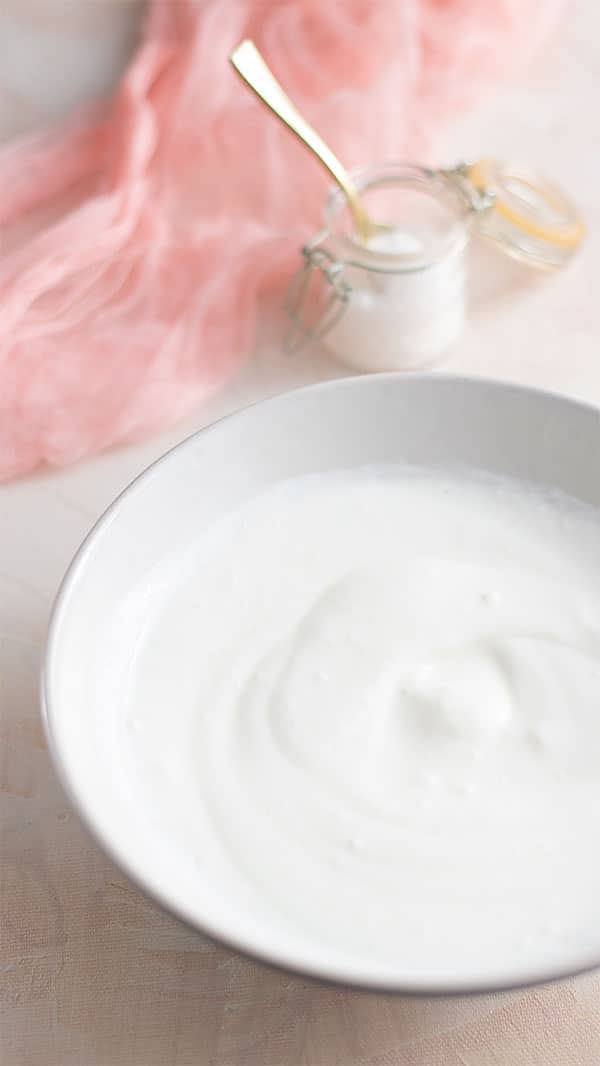
Place 340 grams of full-fat plain yogurt in a bowl.
Add ⅛ teaspoon salt and mix thoroughly.
I prefer adding the salt before straining because you can taste the yogurt at this point and get an idea of whether the seasoning suits you.
2. Transfer it to cheesecloth
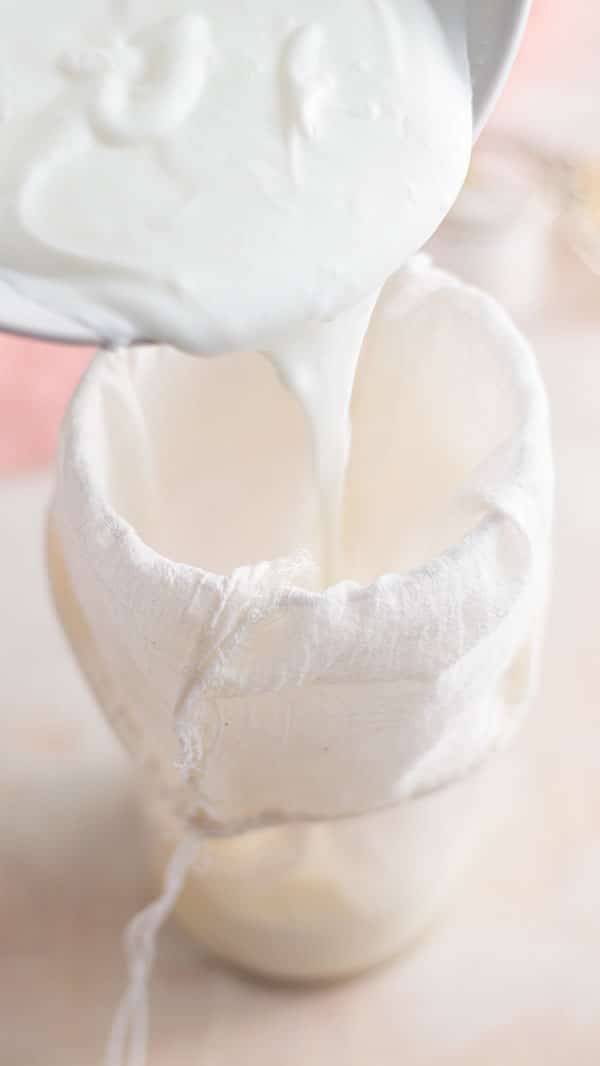
Place the salted yogurt in the center of a clean cheesecloth. Gather the sides of the cloth together to form a pouch and secure it well.
3. Hang the yogurt
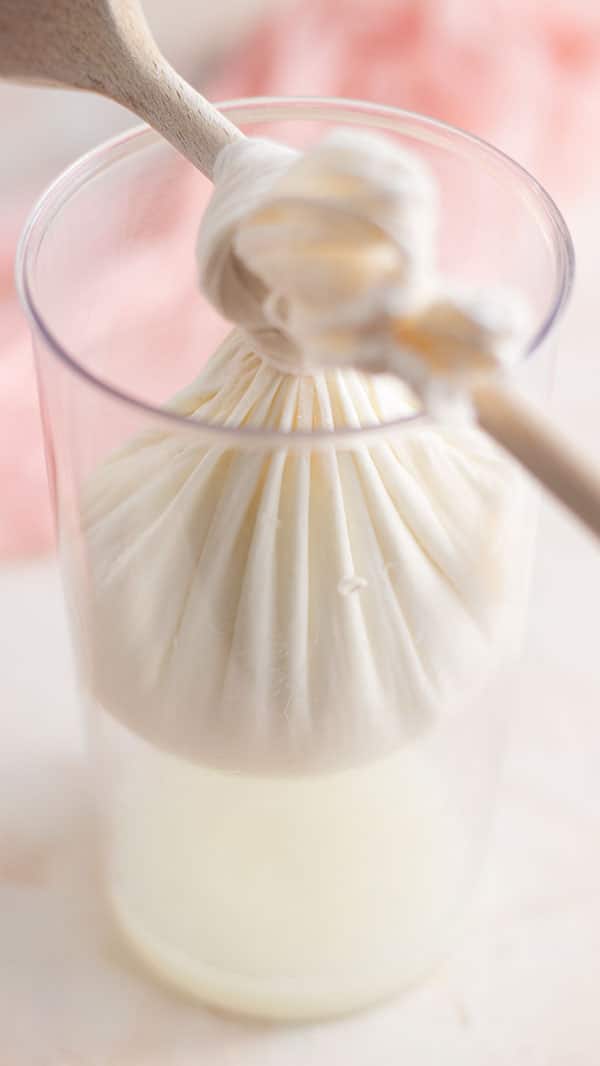
Tie the cheesecloth bundle around the handle of a wooden spoon.
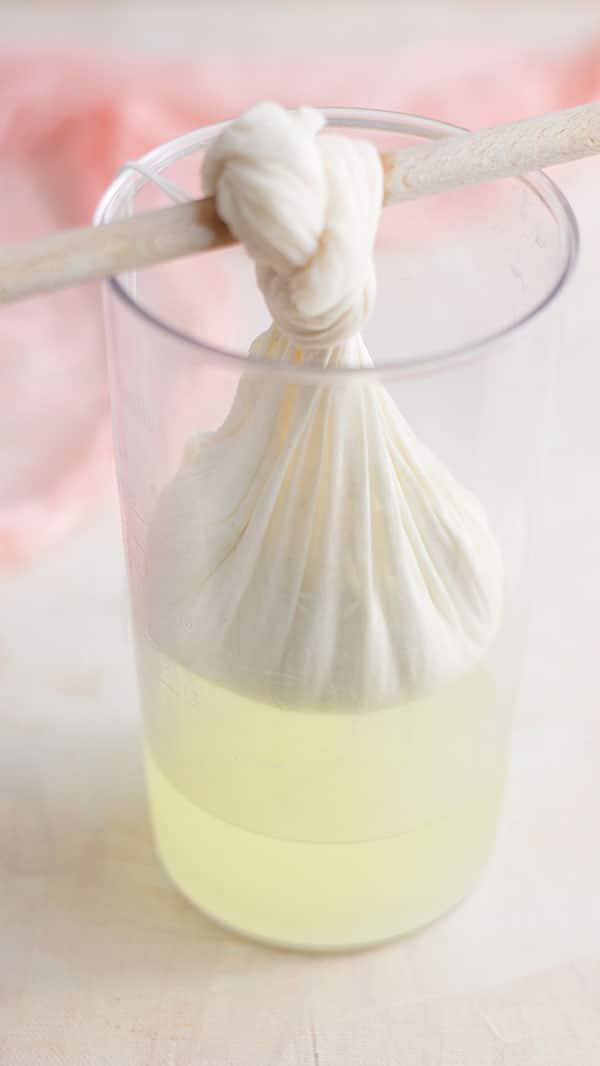
Place the spoon across the top of a tall container so that the yogurt bundle hangs freely inside without touching the bottom. Make sure there is enough space underneath for the whey to collect.
4. Refrigerate and strain
Place the entire container in the refrigerator and allow the yogurt to strain.
My 340-gram batch took 19 hours to reach the thick, creamy, and spreadable consistency I wanted.
You may need more or less time depending on the amount of yogurt you’re using, how thick the yogurt was to begin with, and the final texture you prefer.
5. Check the consistency
Before opening the cheesecloth, I gently pressed the bundle with my hand to make sure there wasn’t any easily removable whey still trapped inside. I didn’t use weights or heavily press the yogurt while it was straining.
Open the cheesecloth and transfer the labneh to a clean container.
My 340 grams of yogurt produced approximately 150 to 160 grams of labneh, while roughly 175 ml of whey collected in the container.
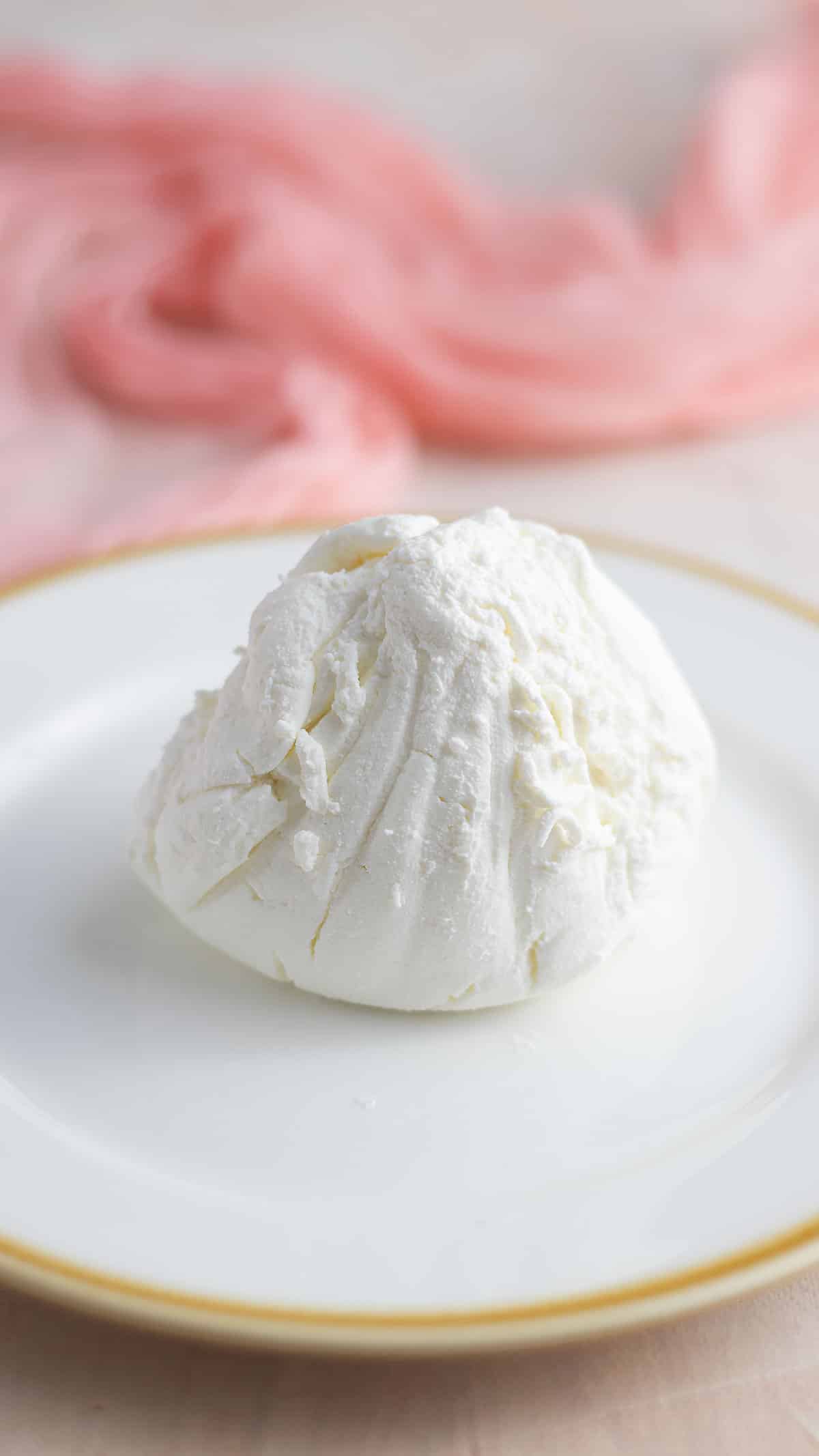
The finished labneh was thick enough to hold its shape but still wonderfully creamy and easy to spread.
How Long Should You Strain Labneh?
You’ll often see instructions telling you to strain labneh for 24 or even 48 hours, but don’t rely on the clock alone.
Batch size matters.
I was making only 340 grams of yogurt, so my small bundle reached the texture I wanted after 19 hours. Larger quantities can take longer to drain.
The yogurt itself also matters. A thin yogurt may release more whey than an already-thick one.
The best indication is the texture: for classic spreadable labneh, it should be thick and creamy and hold its shape while still spreading easily over bread.
What Does Labneh Taste Like?
Labneh has a creamy yogurt flavor with a distinctive, pleasant tang.
Mine tasted exactly how I wanted it—not mild enough to lose its identity and not so sour that the acidity overwhelmed everything else.
One important thing to remember is that the flavor of your yogurt becomes concentrated as the whey drains away.
So taste your yogurt before you begin. If your yogurt is very tangy, expect the finished labneh to have a stronger tang as well.
For an old-school Lebanese-style flavor, I prefer starting with a good-quality full-fat plain yogurt that tastes balanced on its own.
Can I Make Labneh With Greek Yogurt?
Yes.
Greek yogurt is already strained, so it contains less whey than regular yogurt and generally requires less straining to become labneh. Regular full-fat yogurt, however, works perfectly well and is the traditional starting point I prefer for this recipe.
If using Greek yogurt, don’t automatically use my 19-hour timing. Start checking it earlier because you’re beginning with a thicker product.
How to Serve Labneh
My favorite simple way to serve homemade labneh is spread on a plate with good olive oil and your choice of toppings.
Try it with za’atar, olives, fresh mint, cucumber, tomatoes, or warm pita bread.
It also makes a lovely breakfast. I recently ate this batch with seasoned eggs and bread, and that confirmed why I’m happy with the modest amount of salt in the recipe. The eggs provided additional seasoning, and everything tasted balanced together.
You can also use labneh as a spread in sandwiches and wraps or include it on a mezze platter.

How to Store Homemade Labneh
Transfer the finished labneh to a clean airtight container and keep it refrigerated.
For this fresh homemade version, I recommend enjoying it within about 7 to 10 days and always using a clean utensil when serving it.
This is another reason I like making a smaller batch: you can enjoy fresh labneh without having a large container lingering in the refrigerator.
Tips for the Best Homemade Labneh
- Use full-fat yogurt. It gives the labneh a richer, creamier texture.
- Choose yogurt you like eating. Straining concentrates its flavor as well as its texture.
- Salt before straining. It distributes the seasoning evenly and lets you judge the starting flavor.
- Don’t over-salt it. Remember what you plan to serve alongside it. Za’atar mixtures, olives, eggs, and other accompaniments can bring additional salt.
- Keep it refrigerated while straining. Don’t hang the yogurt on the kitchen counter overnight.
- Make sure the cheesecloth isn’t sitting in the drained whey. Leave plenty of room beneath the bundle.
- Judge by texture, not only time. Your yogurt, batch size, and preferred consistency determine when the labneh is ready.
Frequently Asked Questions
Is labneh the same as Greek yogurt?
Not quite. Both involve removing whey from yogurt, but labneh is generally strained further to produce a thicker, spreadable consistency. Greek yogurt can also be used as the starting point for making labneh.
Is labneh cream cheese?
Labneh is sometimes called yogurt cheese, but it isn’t conventional cream cheese. Labneh is made by straining yogurt, giving it its characteristic cultured, tangy flavor.
Can I make labneh without Greek yogurt?
Absolutely. The straining time will be less.
Why is my labneh too sour?
Your starting yogurt may have been quite tangy. Because straining removes whey and concentrates the yogurt, its flavor becomes more pronounced.
Try a milder plain yogurt next time if you prefer less tang.
Why is my labneh still runny?
It probably needs more time to strain. Also make sure the cheesecloth bundle is suspended above the collected whey rather than sitting in it.
Can I strain labneh for two days?
Yes, but the longer it drains, the firmer it becomes. If your goal is creamy, spreadable labneh, start checking much earlier—particularly when making a small batch. Recipes commonly vary from overnight to 24–48 hours depending on the desired result.


Homemade Labneh
Ingredients
- 340 grams full-fat plain yogurt
- ⅛ teaspoon salt
- Optional for serving: Extra virgin olive oil za’atar, olives, fresh mint, cucumber, tomatoes, or pita bread.
Instructions
- Add the yogurt and salt to a bowl and mix well.
- Spoon the yogurt mixture into the center of clean cheesecloth and gather the cloth into a secure bundle.
- Tie the cheesecloth around the handle of a wooden spoon. Rest the spoon across a tall container so the bundle hangs freely without touching the bottom.
- Refrigerate and allow the yogurt to strain for about 19 hours, or until thick, creamy and spreadable.
- Before opening the cloth, gently press the bundle to check for any easily removable trapped whey. Don’t squeeze it aggressively.
- Transfer the finished labneh to a clean airtight container and refrigerate.
- Serve with olive oil and your favorite toppings.
Notes
- My 340 g batch yielded approximately 150–160 g labneh and 175 ml whey.
- Straining time varies by yogurt, quantity, and desired consistency. A larger batch may require longer than 19 hours.
- Use regular full-fat plain yogurt for this recipe. You can also use Greek yogurt, but it will generally strain more quickly.
- The tanginess of your finished labneh depends heavily on the yogurt you start with.
- I deliberately keep the salt modest because labneh is often eaten with salty or seasoned accompaniments.
- Store in a clean, airtight container in the refrigerator, and enjoy within about 7–10 days.